

The blue hour
Twilight in the winter. The vulnerability of farm life. Remembering that those times are long gone even when memory tries to trudge them back up.

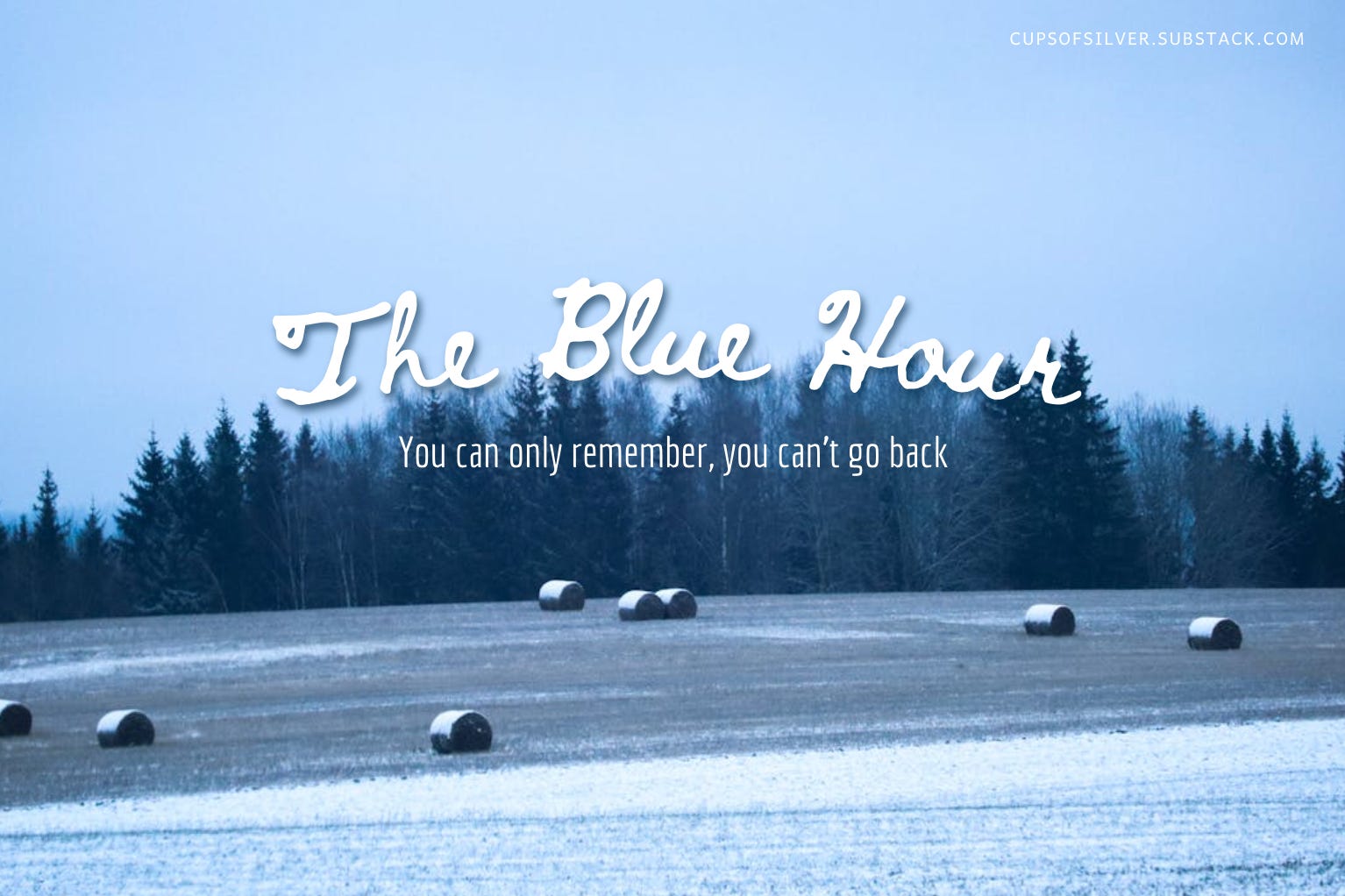
There’s this phenomenon that happens during the winter and early spring, here up in the north, the blue hour1 they call it. That phase during the growing twilight when all the colours of the world seem to take on a bluish hue. As if god mistakenly dipped his paintbrush in that bold dollop of cobalt rather than the pinks and maroons he had intended. While this trick of the light occurs worldwide at different times, here in Alberta, it seems most prevalent during the cold months.
And I think that’s so fitting. That each winter for an hour or two, the prairies paint themselves in the deepening shades of blue. The sky turning a new shade of periwinkle. The icy sidewalks dip into indigos. The creatures scurrying out from their hiding places to forage and fight through the cerulean snow. And in the midst of this blue hour, we sit, huddled in our heated homes, ignorant of the world turning around us.
I can’t help but watch this blue hour as it spreads out across the sky, like a great curtain closing on some sad show. As the colour deepens, so too do the memories: trudging out to the barn to check for lambs before bedtime, chopping a hole in frozen dugout for the horses to drink from, the howl of coyotes in the distance as the dogs prepared to stand their ground.
Even in the growing darkness, there was work to be done on the farm. The animals always needed to be watered and fed, barn stalls to be scooped clean, and the land surveyed for trouble. There wasn’t much downtime as most people would consider it. Something was always broken and in need of repair or replacement. Some poor creature nearing the verge of death.
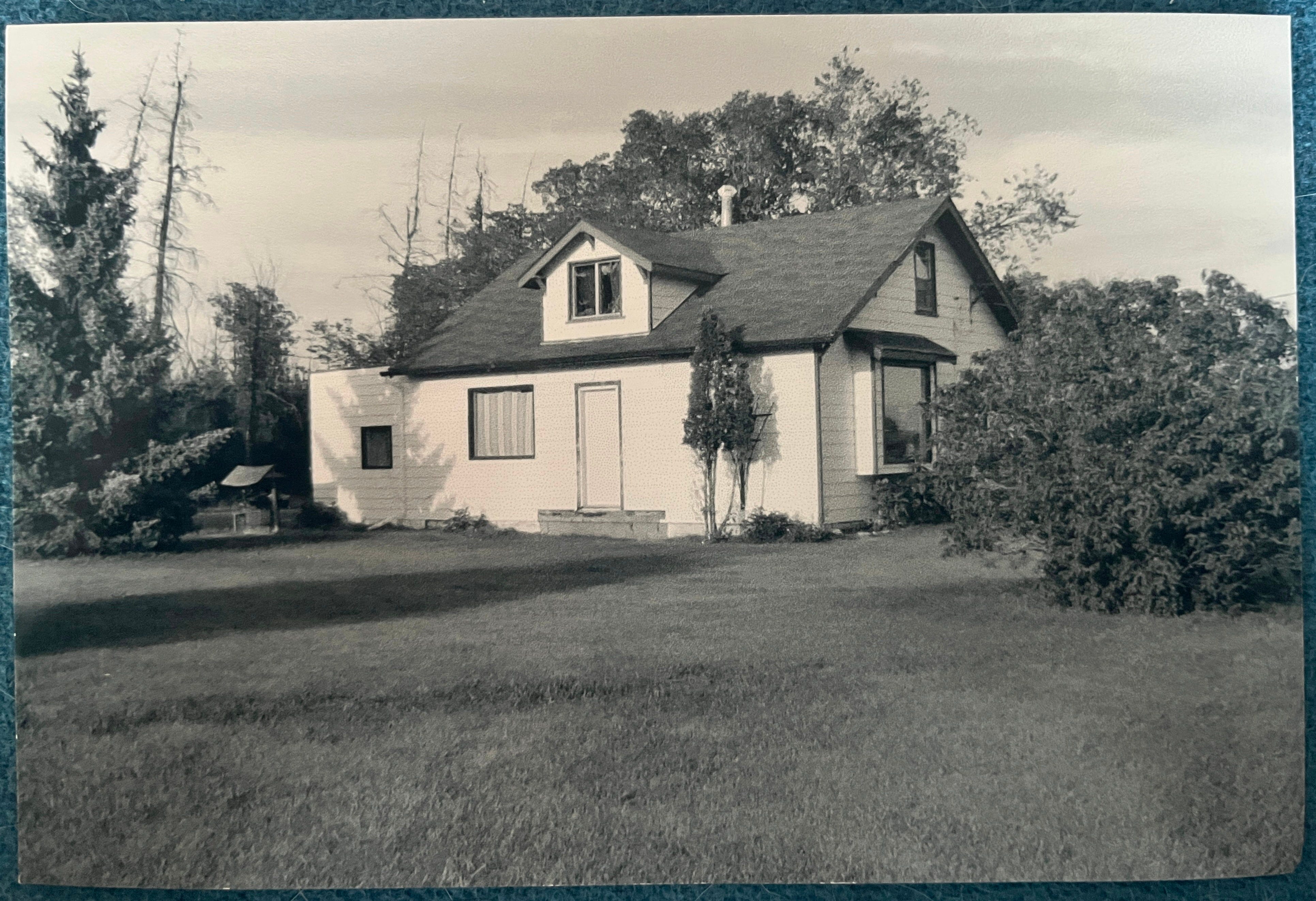
When the blue hour struck, and the chores were still waiting to be done, I can remember the fear of being out, alone in the dark. It wasn’t the night that I was afraid of, no, it was the vast expanse of the prairie encircling me. That much open space, lit by a flashlight a decade older than I was, shines a light on your vulnerability.
Because this is the thing about rural living: you’re closer to death than most. Everything is fighting for survival out there, and when you decrease your proximity to people, you increase your closeness to creation. And what is life without death?
There are gophers to be shot. Coyotes who kill barn cats. Calves caught in the barbed wire. Foals born as lethal whites2.
And that’s just the beginning. If it’s not another creature, it’ll be the weather that kills you: freak snowstorms that knock out power poles, rains that turn into floods, forest fires that devour the dry prairie grasses.
You can’t farm without failing in some way.
There’s one snippet of memory that comes up again and again:
I’m fifteen or sixteen, bundled up in my hand-me-down winter gear, walking across the yard to check on the animals in the barn before blockading myself in my bedroom for the evening. It’s the blue hour, and it’s dwindling into the blackness of night faster than I can move my winter boots. The snow crunching loudly underfoot fills my ears while my hot breath puffs out in great plumes of white.
I can remember looking up and seeing the night sky filled with stars, the moon a dark void.
I can remember wondering why god would make me live like this, surrounded by so much manual labour and animal death.
I can remember praying to escape this place.
And now, from the window of my apartment, rather than sliding on my Carhartts3 to brace against the cold as I fumble through chores, I’m sitting here watching the blue hour deepen into darkness. The only light is the glow of yellow headlights illuminating the city streets as commuter cars disappear down alleyways. I tell myself that there are no lambs that need bottle feeding, no horses dehydrated from frosty thirst, no barn cats cuddling to stay warm in the rundown rafters of the barn.
But a part of me still feels that urge to go outdoors, into the blue night, to check on the vulnerable fighting to survive.
The blue hour is the period of twilight when the Sun is at a significant depth below the horizon. During this time, the remaining sunlight takes on a mostly blue shade. This shade differs from the colour of the sky on a clear day, which is caused by Rayleigh scattering. Source.
Overo Lethal White Syndrome (OLWS) is a fatal genetic disorder in newborn foals, predominantly in American Paint Horses, caused by a mutation (EDNRB gene) inherited from both parents. Affected foals are born completely white with blue eyes and suffer from an underdeveloped, non-functional intestinal tract (aganglionosis). They develop severe, untreatable colic and die within days of birth. Source.
The workwear, not the trendy streetwear.
Spill a little silver
If you enjoyed this piece or found something in it that stayed with you, you can help keep CupsOfSilver going. If you’re not ready to commit to a full subscription, leaving a tip is a simple way to support my work. Every bit goes back into the time, care, and coffee it takes to keep writing.
Thanks for reading and for being here.